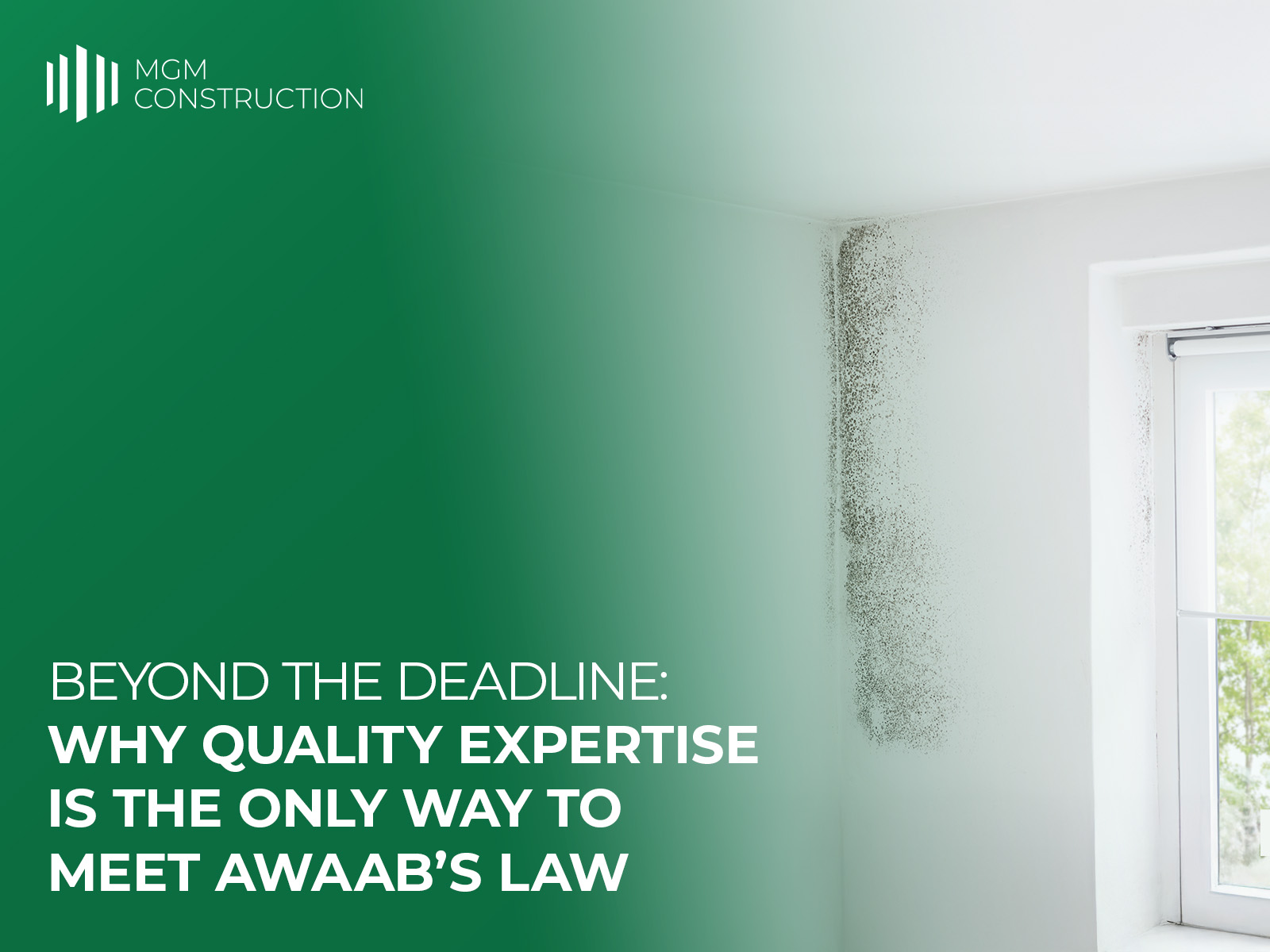
The introduction of Awaab’s Law marks one of the most significant shifts in social housing regulation in recent years. Named after two-year-old Awaab Ishak, who tragically died as a result of prolonged exposure to mould in his family’s home, the law aims to ensure that no tenant has to live in unsafe or unhealthy housing again.
Following the introduction of Awaab’s Law in late October 2025, social landlords in England are now required to act within defined timeframes to investigate and resolve serious housing hazards such as damp and mould. The legislation places accountability firmly on social landlords, ensuring faster responses to reports of hazards that can seriously impact health and wellbeing. For tenants, this means that long-standing issues must now be dealt with urgently, reducing the risks associated with poor indoor air quality and unsafe living conditions.
While the intentions behind the law are commendable, its implementation presents significant challenges. The new timeframes for inspection and repair are tight, leaving little room for the complex investigative work often required to properly assess and resolve underlying issues such as damp ingress, condensation or structural decay. In many cases, effective damp remediation involves specialist diagnostic testing, careful planning and skilled workmanship—all of which take time to carry out safely and correctly.
Across the construction and property care industry, there is growing concern that the pressure to comply within these rigid timescales could result in landlords turning to less qualified or inexperienced contractors who promise to complete the work quickly. In the short term, this might help housing providers meet compliance deadlines, but the long-term consequences could be far more costly. Poorly executed damp and mould repairs can lead to recurring issues, unnecessary expenditure and additional distress for tenants if the root causes are not properly addressed.
MGM Construction shares the government’s commitment to improving housing standards and supports the positive intentions of Awaab’s Law. With over 20 years of experience in social housing and a team that includes CSRT-qualified surveyors and time-served tradespeople, MGM understands the level of expertise required to identify and permanently resolve damp and mould problems. As long-standing members of the Property Care Association (PCA), MGM’s team is regularly audited and upholds rigorous industry standards designed to protect both clients and residents.
While this level of service may come at a higher cost than some competitors, it reflects a commitment to quality, compliance and long-term value. MGM’s approach ensures that the work is done right the first time—protecting both landlords and tenants from recurring issues, wasted budgets and potential compensation claims that can arise from quick, low-quality fixes. The company’s investment in training, auditing and sustainable practices ensures that every project meets the standard that Awaab’s Law was created to achieve: safe, healthy homes for all.
Awaab’s Law is a vital development for housing safety in the UK, but meeting its requirements effectively will depend on more than just speed. It will require skilled, qualified teams who understand the science of building integrity and who take the time to deliver solutions that last. MGM Construction stands ready to support social landlords in meeting these new responsibilities with confidence and quality.
For more information or to discuss how MGM Construction can support your social housing projects, please contact our team today.